Argus documentation
Argus is an agent-readable financial data layer. It returns cited, structured financial facts through CLI + Skill, MCP, and REST. The website explains how to connect; the API and MCP services execute requests.
Structured financial facts for AI agents · CLI + Skill · MCP · REST.
Cited financial facts, structured for AI agents.
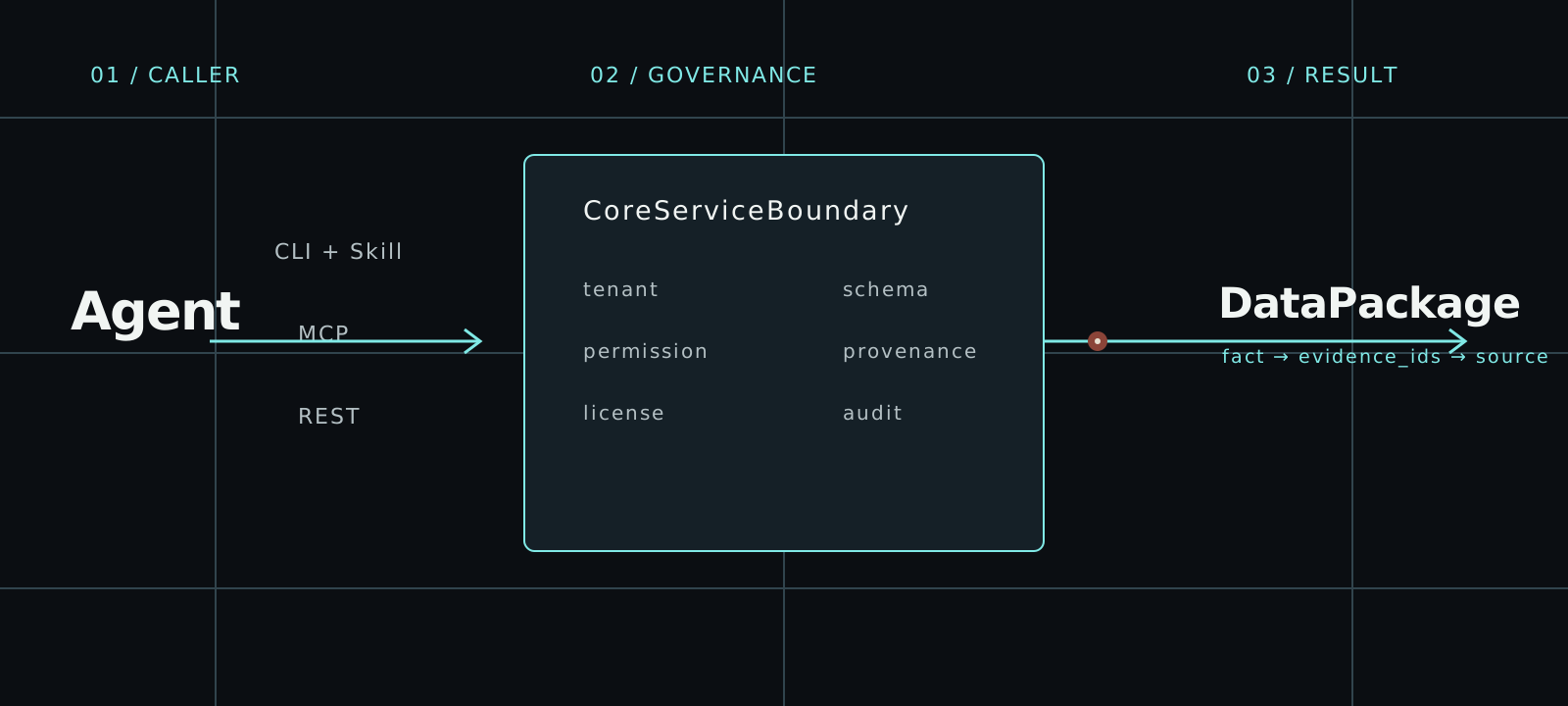
The product returns structured facts, labeled source material, evidence, permissions, license status, data quality, point-in-time metadata, handling restrictions, and audit identifiers. Argus itself does not generate investment judgments or execute orders, but it does not restrict a client AI agent from using lawfully accessible data for independent analysis, judgments, or downstream output.
Audience
These documents are for developers, agent tool integrators, platform engineers, and compliance reviewers. They are not written as retail investor guidance or a product marketing page.
Choose where to start
| Your goal | Start here |
|---|---|
| Make the first authenticated request | Getting Started |
| Choose a tool and inspect its permissions | Agent Tool Registry |
| Integrate over HTTP | REST API |
| Integrate an MCP-aware agent | MCP |
| Understand every result field | Data Package Dictionary |
| Load or synchronize source data | Connectors |
| Deploy or operate the service | Deployment and Observability |
| Diagnose a failed call | Troubleshooting |
Required reading
- Data Package Dictionary defines the public data package and source evidence fields.
- Core Boundary explains why CLI, REST, and MCP must call the same
coreservices. - Agent Tool Registry lists the currently exposed machine tools.
- CLI Usage and API Overview describe access surfaces as thin adapters.
- Deployment describes the local Docker Compose runtime.
What Argus returns
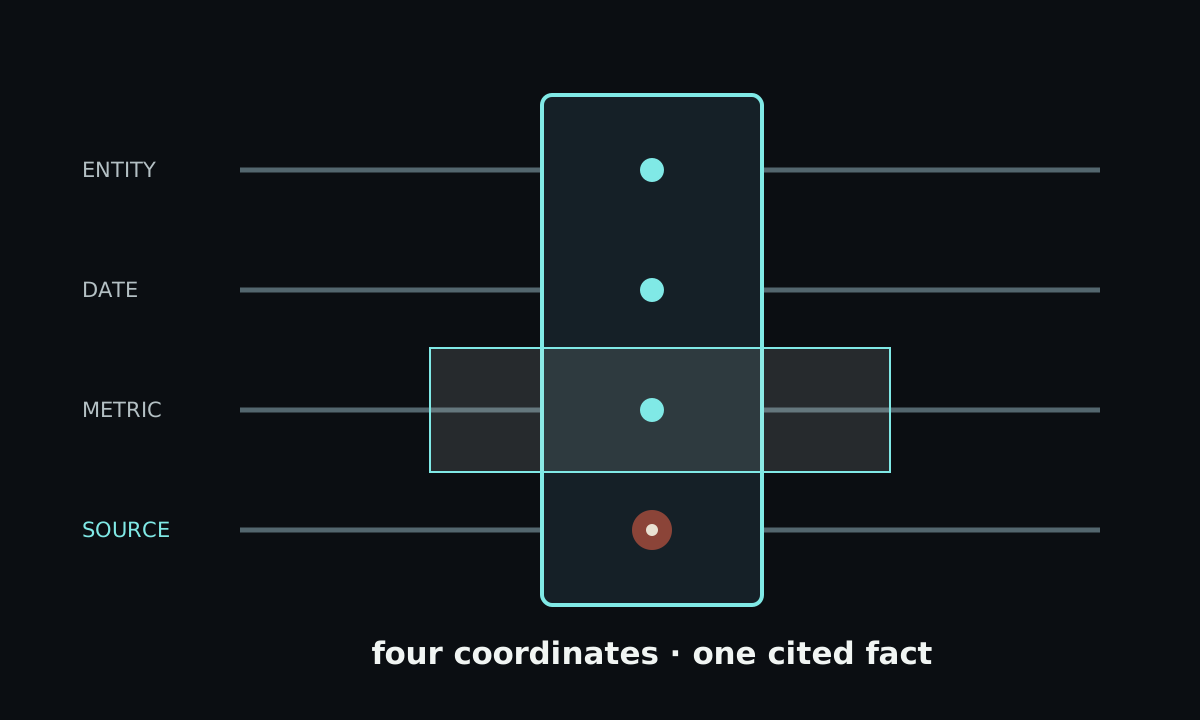
Successful governed factual calls return a CliToolEnvelope containing the selected
tool, an audit_id, permission and license decisions, source evidence, output
restrictions, and a nested DataPackage result. Registry and administration
operations use their declared contracts instead: for example,
agent_tool_registry returns an AgentToolRegistrySnapshot, not a DataPackage.
Read output_format.schema_name from each registry tool before decoding a response.
The registry's canonical envelope version names the contract kernel; current
business invocation responses use the wire envelope above. Use live OpenAPI and
MCP schemas plus binding parameter mappings for executable requests.
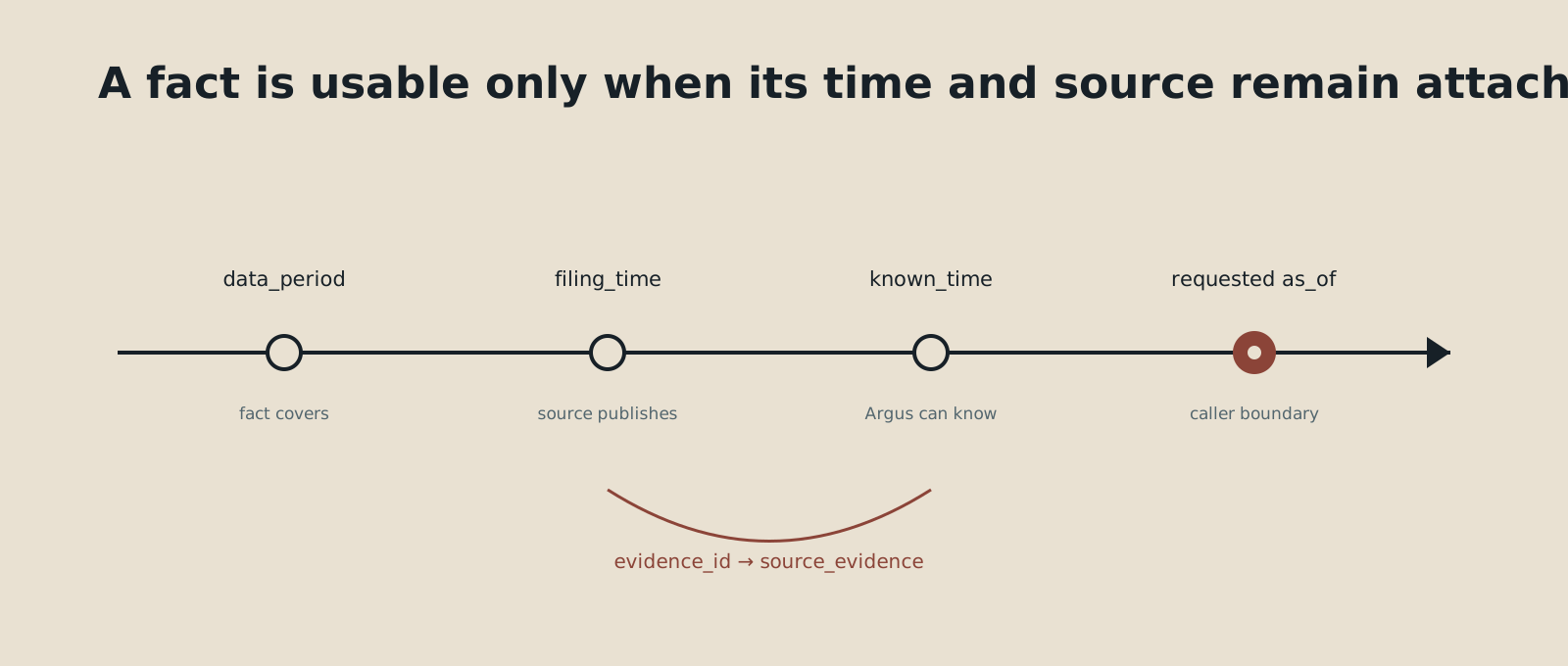
Treat a returned factual package as a contract, not as presentation-ready prose. Before consuming a fact, check:
successandaudit_idon the outer envelope;data_quality.requires_human_reviewand any structured issues;data_license.status,allowed_uses,prohibited_uses, and redistribution;- the fact's
evidence_idsagainstsource_evidence; known_timeagainst the requestedas_oftime;output_restrictionsbefore forwarding or transforming the result.
Public service map
| Surface | Public location | Intended caller |
|---|---|---|
| Static website | https://www.argusfa.com/{locale}/ |
People reading onboarding and tool reference |
| MkDocs reference | https://www.argusfa.com/docs/ |
Developers, operators, and compliance reviewers |
| REST | https://api.argusfa.com |
Machine clients and customer-side CLI |
| MCP | https://mcp.argusfa.com/mcp |
MCP-aware agents |
| OpenAPI | https://api.argusfa.com/openapi.json |
REST schema discovery and client generation |
| Tool registry | https://api.argusfa.com/v1/tool-registry |
Tool discovery, permissions, bindings, and compatibility |
The static website never accepts credentials and never executes a tool call.
Product boundary
Every response must remain machine-readable and auditable. A valid result needs source evidence, known-at timing, data quality, license status, output restrictions, and an audit id. A natural language paragraph alone is never a valid argus result.
Prohibited requests are rejected by policy and should be redirected to safe factual tools such as company_fact_snapshot, filing_search, event_timeline, point_in_time_snapshot, data_quality_check, or source_evidence_lookup.